
Paid Facebook Groups: $4,500/Month From a 900-Member Niche Community
 $4.5K/MOFacebook
Paid Facebook Groups
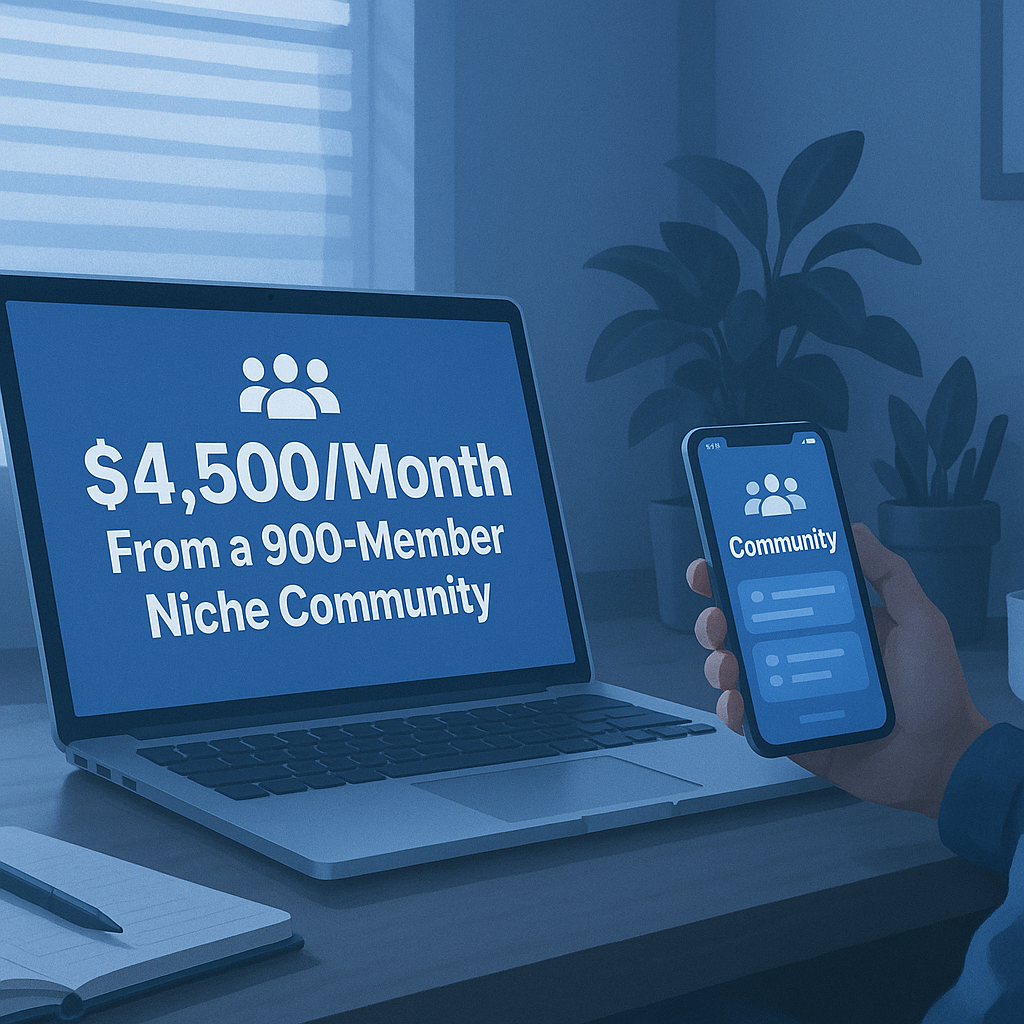
By leveraging a niche community on Facebook, I've been able to generate $4,500 a month from a 900-member paid group. Here’s how I did it, including the specific tools and strategies that worked for me.
Picking the Right Niche for Maximum Engagement
Choosing the right niche is crucial. I settled on 'Sustainable Living' after noticing the growing interest in eco-friendly practices. The key is to find a niche that not only excites you but also has enough demand. Using Google Trends, I identified that searches for terms related to sustainable living had increased by 60% over the past year. Once I had my niche, I set up a Facebook Group and started with a free version of the group to gauge interest before monetizing.
Engagement started small, but consistent content—like tips on zero-waste living and DIY projects—helped foster a community feeling. Tools like Buffer ($15/month) helped me schedule posts consistently. I aimed for engaging content that prompted discussions which ultimately led members to feel they were part of something worthwhile.
Building the Community: From Free to Paid
Initially, my group was free for the first six months to attract members. I focused on creating a valuable environment where people could share experiences and tips. I used Facebook Live sessions to connect personally and build trust. After hitting 300 members, I introduced a tiered membership model, offering a premium option for $15/month.
The transition was smooth because I had already established a rapport with the community. For the first paid month, I converted 40 members. With PayPal (2.9% + $0.30 per transaction), the revenue started flowing in. By maintaining strong engagement, I kept churn low, which was crucial for sustaining growth.
Content That Drives Value and Retention
To keep the community active, I implemented a monthly webinar series featuring guest experts in sustainable living, which cost about $200 per session for honorariums. I scheduled these on a consistent day every month, which built anticipation. Additionally, I created downloadable resources (like meal prep guides and checklists) available only to paying members.
Engaging content led to long-term retention. In fact, the retention rate after introducing paid content was about 90% month on month. I utilized Google Forms to gather feedback on what members wanted more of, allowing me to iterate and improve continuously.
Automation Tools to Simplify Management
Managing a community of 900 can be overwhelming without the right tools. I invested in MemberSpace ($25/month) to handle payments and member access easily. It integrated seamlessly with my Facebook group, automating the onboarding process for new members. I also set up Zapier to automate reminders and notifications about upcoming events or renewals, saving me at least 5 hours a month.
Additionally, using Canva for creating eye-catching social media posts boosted engagement. The $12.95/month subscription allowed me to maintain a consistent brand aesthetic across all my visuals.
Marketing Strategies that Convert
To grow my group, I leveraged Facebook Ads, allocating $200/month to create targeted ads aimed at users interested in sustainability. Analyzing these ads’ performance, I tracked conversions closely through Facebook’s ad manager and adjusted spending based on what worked best.
I also encouraged current members to invite friends, offering a free month for each referral. This grassroots approach led to an increase in membership by 25% in just two months. The organic growth combined with ads helped scale the group steadily.
The Importance of Data Tracking and Analytics
Numbers tell a story. I used Google Sheets to track my monthly income, expenses, and member retention rates. The first month of charging members brought in $600, and by the end of three months, that had grown to $1,800. Keeping track of every dollar allowed me to identify trends and optimize my offerings.
Moreover, tracking engagement metrics in Facebook Insights helped me understand which posts resonated with the audience, guiding future content strategies. It was essential to adapt based on hard data rather than gut feelings.
Mini Case Study: Month-to-Month Breakdown
In January, I monetized for the first time and brought in $600. My strategy included two main webinars and a series of exclusive posts. February saw a jump to $1,200 as I refined my content. By March, I was generating $2,500, all thanks to targeted ads and effective member engagement strategies. In April, I hit $3,500 as retention continued to soar and new member invitations rolled in.
By May, I reached $4,500, thanks to launching an exclusive summer challenge that prompted members to participate actively. This trajectory taught me that consistent value and community engagement were essential for scaling.
Challenges Faced and Lessons Learned
Challenges are part of the journey. Initially, member churn after the first billing cycle was higher than I anticipated. Feedback indicated members wanted more premium content, which prompted me to ramp up which ultimately fixed the issue. Additionally, balancing content creation and community management was tough, and I realized that hiring a virtual assistant for $20/hour for 10 hours a month could relieve some pressure.
It's crucial to take feedback seriously and adapt continuously. If something isn’t working, adjusting quickly can be the difference between thriving and just surviving.
Sustaining Growth Over Time
Looking ahead, my focus is on sustaining and scaling this income. I've started collaborations with brands that align with my niche, creating affiliate partnerships which provide another revenue stream. The goal is to diversify income while keeping the community's core values intact.
Additionally, I'm working on creating an online course that could act as a lead magnet for the group. The feedback and engagement have provided a roadmap for what members want, which will help ensure its success. Sustainable growth is not just about income but also about fostering a community that thrives together.
More in Facebook
 $1,800/MOFacebook
Facebook Reels Bonus Program
Facebook Reels Bonus Program: $1,800/Month With 30-Second Clips
The Facebook Reels Bonus Program can net you up to $1,800 a month by creating engaging 30-second clips. If you're serious about monetizing your content, it's time to dive deep into the mechanics.
 $2,200/MOFacebook
Facebook Marketplace Flipping
Facebook Marketplace Flipping: $2,200/Month Buying and Reselling Locally
In a few short months, I turned my Facebook Marketplace side hustle into a reliable $2,200 per month by flipping everyday items. With the right strategies and tools, you can do it too.
 $3K/MOFacebook
Facebook Ads to Affiliate Funnel
Facebook Ads to Affiliate Funnel: $3,100/Month Selling Digital Templates
Last month, I pulled in $3,100 using Facebook ads to drive traffic to my affiliate funnel for digital templates. This wasn't luck; it was a methodical approach backed by numbers and targeted strategies.