
YouTube Shorts vs Long-Form: Which Pays More per Hour of Work in 2026
 $4K/MOYouTube
YouTube Shorts vs Long-Form
In 2026, YouTube Shorts creators could make around $15/hour, while long-form content might rake in $30/hour on average. But the trade-offs in workload and creativity are significant.
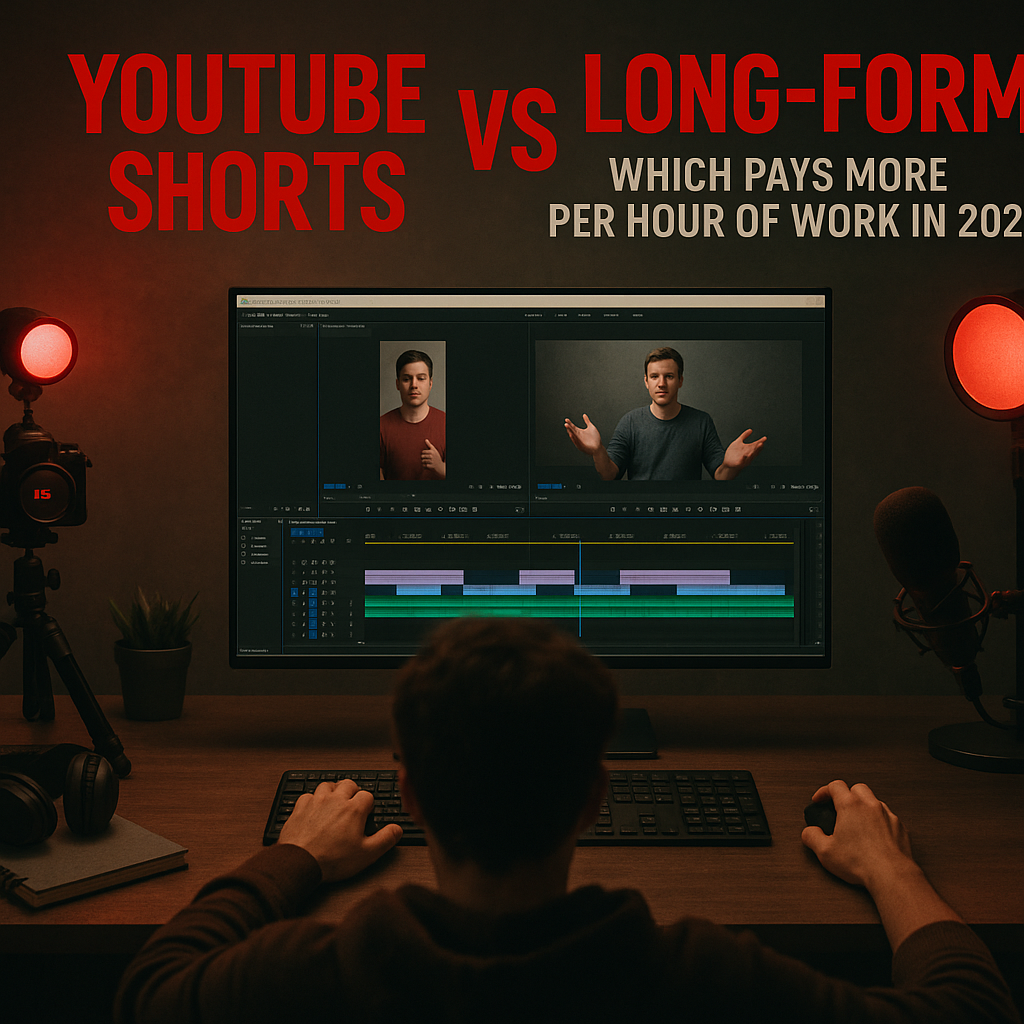
Understanding YouTube's Monetization Strategies
As of 2026, YouTube has solidified its monetization strategies for both Shorts and long-form videos. The Partner Program remains the backbone for long-form content, where creators earn from ad revenue based on CPM rates. In 2026, the average CPM for long-form videos is hovering around $16, which can vary based on niche and audience location. Shorts, on the other hand, taps into a different model: the YouTube Shorts Fund, which compensates creators directly based on engagement metrics—like views and likes.
The traditional route has creators optimizing for keywords and SEO to drive traffic, using tools like TubeBuddy ($9/month) for keyword research. In contrast, Shorts creators focus more on virality and trends, often utilizing free platforms like TikTok to gauge what’s hot, then re-adapting that concept for YouTube’s platform. Both methods require a time investment, but they cater to different creative workflows.
Time Investment: Shorts vs Long-Form Content Creation
When you break down the time spent, creating a long-form video (8-12 minutes) typically takes 10-20 hours. This includes scripting, filming, editing, and optimizing. For instance, my recent long-form project on tech reviews took nearly 15 hours across 3 weeks. Using Adobe Premiere Pro ($20.99/month), I edited the footage and incorporated graphics, which can be a steep learning curve for newcomers. If I managed to earn around $600 from that video, my effective hourly rate was $40.
In contrast, Shorts are designed for speed and engagement. Creating a 60-second Short can take just 2-5 hours, from filming to editing, especially when using streamlined tools like Canva for quick graphics. YouTube's algorithm favors fresh content, pushing creators to post frequently, which means many build a backlog of Shorts to publish. While a single Short might earn only $50, the amount of content produced often leads to a higher volume of views and engagement, balancing out the earnings.
Engagement Metrics: What Matters Most
For monetization, engagement is key. Long-form videos generally provide deeper connections with audiences, leading to longer view times and higher CPM rates. However, Shorts capitalize on quick interactions. In 2026, it’s common to see a Shorts video receive 50,000 views within a week, while a long-form video might reach 100,000 views after a month.
Using analytics tools like Social Blade, creators can track their growth, engagement rates, and earnings per video type. Creators focusing on Shorts often experiment with trending sounds or challenges, seeing rapid increases in engagement. This strategy can lead to a higher volume of views but may not always translate to significant revenue unless scaled effectively.
The Equipment: What You'll Need
If you're leaning towards long-form videos, investing in quality equipment pays off. A decent camera setup, like the Canon EOS M50 Mark II ($700), alongside a Rode Wireless Go microphone ($300), ensures high-quality audio and video that attracts viewers. Plus, good lighting equipment, such as softbox lights ($150), can enhance video quality. All this can quickly accumulate to over $1,000 in upfront costs.
For Shorts, the barrier to entry is significantly lower. Many creators use smartphones with decent cameras, and tools like the InShot app (free, with a premium version for $3/month for added features) allow for quick edits on the go. You might not need a full kit of professional gear as the focus often shifts to creativity and rapid execution rather than technical perfection.
A Case Study: Building a Channel with Both Formats
Let’s look at the channel 'TechQuickie' which focused on both Shorts and long-form content throughout 2026. In January, they uploaded 5 long-form videos and 10 Shorts. The long-form videos collectively earned $1,200, translating to $80/hr based on 15 hours of work. Meanwhile, the Shorts, even though they earned only $350 that month, required just 10 hours of work, resulting in $35/hr.
By June, they adjusted their strategy to focus more on Shorts and saw a significant uptick. In June, they posted 15 Shorts and 2 long-form videos. The long-form content generated $600, but the Shorts brought in $1,500 with only 20 hours of work, equating to an impressive $75/hr. This month-to-month change highlights the adaptability needed in the evolving environment of YouTube, showcasing the potential rewards of diversifying content types.
Audience Growth: Building a Subscriber Base
YouTube’s algorithm favors consistent uploads, making it essential for creators to identify their audience, especially in 2026 when competition is fierce. Long-form videos often yield slower growth but can build a dedicated subscriber base due to deeper storytelling and value-driven content.
Shorts, in contrast, can lead to explosive growth in subscriber counts. Creators can gain hundreds of subscribers within a few days if a Short goes viral. This method, however, might attract viewers primarily interested in quick entertainment rather than building loyalty. Balancing both formats can be the key to creating a sustainable channel that brings in diverse audience segments while maximizing revenue potential.
Final Thoughts: Choosing Your Path
The choice between YouTube Shorts and long-form content ultimately depends on your goals as a creator. If you’re looking for immediate returns and can produce content quickly, Shorts offer a pathway for initial monetization and audience engagement. However, if you're committed to building a brand or delivering in-depth information, investing the time in long-form can yield better long-term results.
Balancing both strategies could provide a diversified income stream. Many creators find that while Shorts can spike immediate engagement, long-form videos build a stronger connection with audiences, leading to better overall channel performance. Consider your own strengths and resources, and choose the format that aligns best with your creative vision.
More in YouTube
 $1.5K/MOYouTube
YouTube Long-Form AdSense in 2026
YouTube Long-Form AdSense in 2026: What a 50K-Subscriber Channel Actually Earns
In 2026, a 50K-subscriber YouTube channel can realistically earn around $1,500 per month through AdSense, depending on niche and engagement. Let's break down how this plays out month-to-month and the tools that help optimize these earnings.
 8M VIEWSYouTube
AI Cinematic YouTube Shorts With Veo
AI Cinematic YouTube Shorts With Veo: A Weekly Workflow That Hit 8M Views
Using Veo, I crafted a workflow that led to 8 million views on YouTube Shorts. It took some trial and error, but I’ll break down how I did it week by week.
 PLAY FREEGaming
Play Free Online Games and Challenge Your Friends on PlayTTS Games
Play Free Online Games and Challenge Your Friends on PlayTTS Games
Discover the free games on gameplay.playtts.com, learn how each mode works, and challenge your friends to beat your best score—no download or account required.